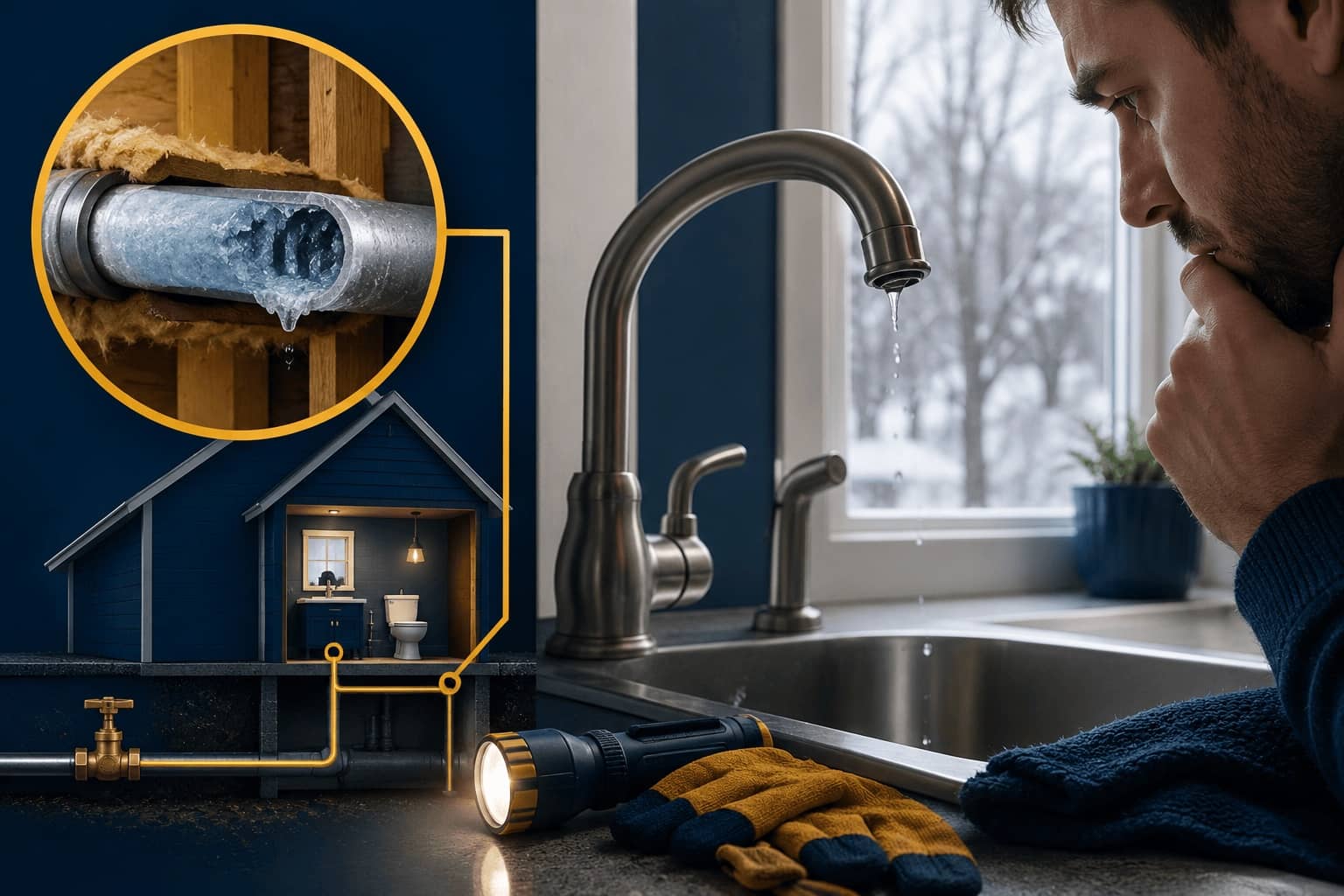
You turn on a faucet during a hard freeze and get almost nothing.
Maybe there is a trickle. Maybe there is no flow at all. You do not see water escaping from a wall, ceiling, cabinet, or crawlspace.
That puts you in a different situation from an active burst pipe.
Metro Water Services’ January 22, 2026 extreme-cold guidance says a faucet that produces only a trickle can indicate a frozen pipe. It also gives specific instructions for thawing an accessible frozen section and a clear stopping point when the frozen area cannot be located, reached, or thawed safely. See Metro’s extreme-cold plumbing guidance.
The job now is simple: protect the plumbing while the pipe is still frozen and know when the situation has changed.
First, Check Whether Water Is Already Escaping
A stopped faucet is no longer the main issue once water is actively leaking where it should not.
Water coming from a pipe, wall, ceiling, cabinet, or crawlspace means the situation has moved into active-leak territory. Shut off the water if you can do so safely and use Gold Star’s 24/7 Emergency Plumbing service.
No visible leak and a freeze-related loss of flow keeps the question in the pre-burst stage.
A whole-property loss of water deserves one additional check. Metro Water Services advises customers to report water outages, unexplained low pressure, or unusual water surfacing outdoors because a public water-main break can produce those symptoms. If nearby properties are affected too, check the utility situation before assuming one private pipe froze.
Keep the Affected Faucet Open and Find Only What Is Accessible
Metro Water Services recommends keeping the affected faucet open while an accessible frozen section is being thawed. As the ice begins to melt, moving water helps the thaw continue.
Likely freeze locations include pipes against exterior walls and the point where the water service enters the building through the foundation. Unheated crawlspaces, garages, basements, and cabinets on exterior walls can also expose piping to severe cold.
The important word is accessible.
Do not start opening walls or dismantling plumbing to chase a suspected frozen section. If the likely area is concealed or cannot be reached safely, stop there.
Warm the Pipe Safely, Never With an Open Flame
For an exposed frozen section, Metro recommends controlled heat such as an electric heating pad wrapped around the pipe, an electric hair dryer, or towels soaked in hot water.
Metro specifically warns against blowtorches, kerosene or propane heaters, charcoal stoves, and other open-flame devices.
Warm the accessible section gradually while the faucet remains open. Metro says to continue until full water pressure is restored.
If you cannot locate the frozen area, cannot access it safely, or cannot restore flow with the recommended methods, stop and call a licensed plumber rather than escalating the heat source or dismantling the building around the pipe.
Know Where the Main Shutoff Is Before Full Flow Returns
A frozen section can conceal damage until the ice begins to release.
Metro Water Services advises property owners to know the location of the interior water shutoff and test it before an emergency. Depending on the home, that valve may be in a basement, utility closet, near the water heater, under a sink, or in a crawlspace.
The point is readiness, not valve repair.
If you cannot identify or safely operate the shutoff, do not force a damaged or stuck valve. A shutoff that is inaccessible, stuck, or not working correctly is a separate residential plumbing problem; see Residential Plumbing Services.
Stop the DIY Attempt When the Situation Changes
There are two clear stopping points.
The pipe is still frozen, but the section cannot be located, accessed, or thawed safely: stop the DIY attempt and call a licensed plumber.
Water begins escaping after or during the thaw: shut off the water when possible and move to 24/7 Emergency Plumbing.
No active leak means thaw safely and stay ready to shut the water off. Active leaking means the emergency has already started.
Frequently Asked Questions
Should I shut off the water while the pipe is still frozen?
If there is no active leak, Metro’s published thawing instructions tell you to keep the affected faucet open while an accessible frozen section is being warmed. They do not instruct homeowners to shut off the entire house simply because a pipe is frozen. Know where the shutoff is and be ready to use it. If water begins escaping from a pipe or building surface, shut the water off if you can do so safely and treat the situation as an active leak.
Only the hot water stopped. Is that a frozen pipe or the water heater?
Loss of hot water by itself does not identify the cause. A frozen hot-water branch can interrupt flow, while a water-heater or hot-water-system problem can also leave fixtures without usable hot water. Check whether other hot-water fixtures are affected, but do not open walls or dismantle equipment to guess. If the issue appears to be hot-water production rather than an accessible frozen section, the Water Heater Services page is the better next stop.
The pipe thawed on its own overnight. Do I still need to check anything?
Yes. Check the other faucets in the home even after flow returns. Metro specifically advises doing that because if one pipe freezes, others may freeze too. Keep the main shutoff accessible and watch the thawed area for active leaking; if water starts escaping, move immediately to the active-leak response above.
Metro Water Services cold-weather guidance checked: August 18, 2026. Recheck before seasonal publication.
Gold Star Plumbing serves Nashville, La Vergne, and communities across Middle Tennessee. For a frozen-pipe problem that has reached one of the stopping points above, call our Nashville-area plumbers at (615) 290-9860.